
365 Days of People Doing the Little Things Right
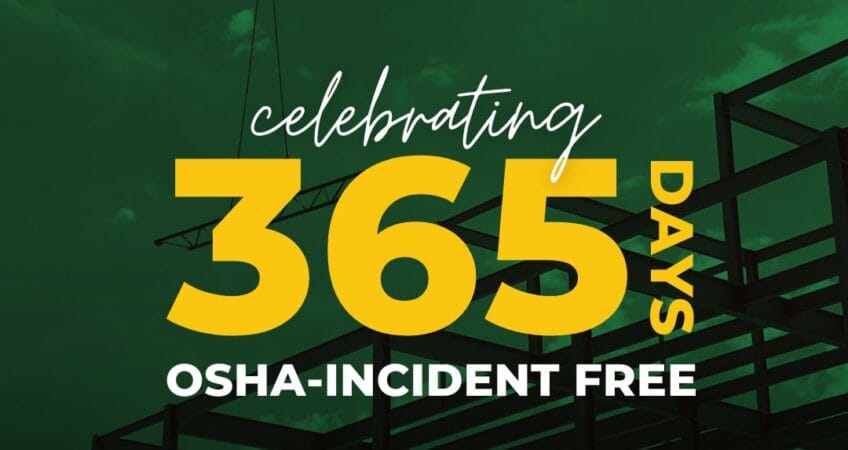
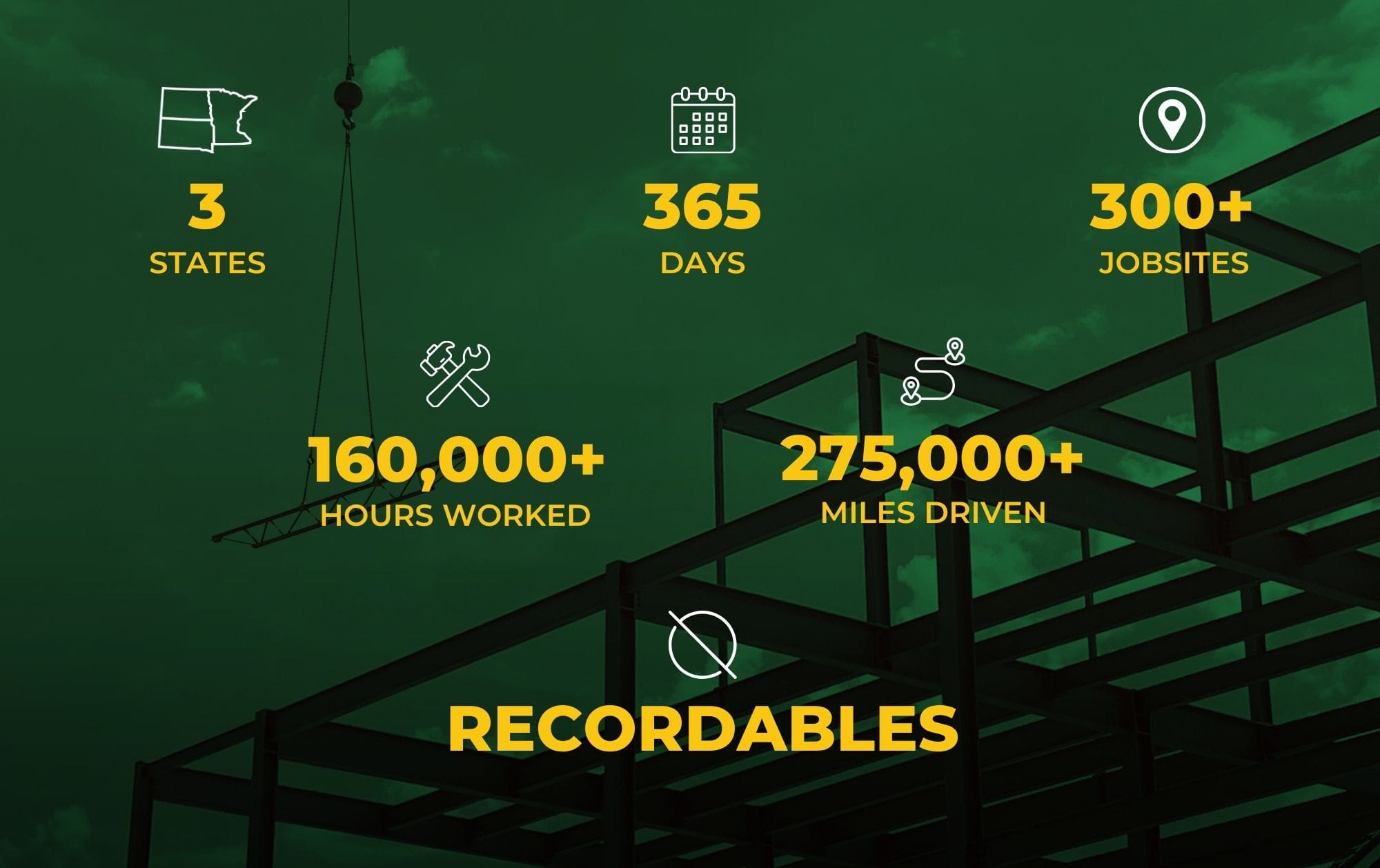
365 days. Three states. More than 300 projects. Over 160,000 hours worked and 275,000 miles driven. And through all of it: zero OSHA recordables.
That’s a milestone we’re pretty proud of. Not because we were chasing a number on a board or counting down the days. In fact, most days it probably didn’t feel like we were working toward a milestone at all. It looked like any other day in construction—crews heading out early, equipment firing up, deliveries showing up, plans changing, weather changing and a lot of work getting done.
And that’s really what makes one full year without an OSHA recordable mean something. It took 365 individual days of people doing the little things right.
So, What Does “OSHA Recordable-Free” Actually Mean?
An OSHA recordable is more than the occasional bump, scrape or first-aid situation that can happen on a jobsite. Under OSHA’s recordkeeping rules, a work-related injury or illness becomes recordable when it meets certain criteria, such as requiring medical treatment beyond first aid, resulting in days away from work or restricted duty, loss of consciousness, or meeting other specific thresholds.
So when we say we went 365 days without an OSHA recordable, we’re talking about an entire year of work without one of those cases among our crews. And there was a lot of work packed into that year.
160,000 Hours Means More When You Self-Perform Construction Work
The 160,000+ hours behind this milestone represent time worked across Comstock—from our offices to our jobsites. That’s how OSHA looks at hours worked, too. For recordkeeping purposes, total hours include salaried, hourly, part-time and other covered employees—not just the people working in the field.
But there’s an important piece of context for us: more than half of our employees work in the field. We’re a contractor that self-performs a good portion of our work. We don’t simply manage construction and subcontract everything out. On many projects, our own employees may be the ones pouring concrete, doing carpentry, erecting steel, completing demolition or tackling other hands-on work.
That means a big portion of those 160,000 hours were spent actively building. Working around heavy equipment. Using power tools. Climbing ladders and working at heights. Moving materials. Working alongside other trades. Dealing with heat, cold, snow, mud and all the other things a Midwest jobsite can throw at you. That’s simply a different kind of exposure than sitting behind a desk. It’s also part of why this milestone means a little more to us.
Because when our crews self-perform the work, those stats are even more impressive.
Most Safe Decisions Aren’t Very Exciting
There’s no big moment that gets you to 365 days. Usually, it’s something much less exciting. It’s somebody taking another look before backing up a piece of equipment. It’s cleaning up a trip hazard instead of walking past it. It’s grabbing the right PPE. It’s asking a question when something doesn’t look right. It’s a superintendent thinking through how several trades are going to work in the same area. It’s changing the plan because conditions on site changed. Or it’s one coworker saying something to another because they spotted something the other person didn’t.
None of those things make headlines. But stack enough of those decisions on top of each other, across 300+ projects and 160,000+ hours of work, and eventually you get to a number like 365.
And Then There Were the 275,000 Miles
Our employees logged more than 275,000 miles during this same stretch, traveling between our offices, projects and communities throughout Minnesota, North Dakota and South Dakota.That’s a lot of time behind the wheel.
So when we talk about getting everyone home safely at the end of the day, we mean that pretty literally. Safety starts before someone arrives on site and doesn’t end until they’re back home.
This Milestone Belongs to the People Who Made It Happen

We can have safety policies. We can hold meetings. We can provide training, PPE and equipment. All of that matters. But none of it works without people buying into it.
This milestone belongs to the employees who made those everyday decisions over the past year—to plan ahead, pay attention, speak up and look out for the people working beside them. That’s the part we’re most proud of.
Three hundred-plus projects were completed or underway. Work happened across three states. More than 160,000 hours were logged and our crews traveled more than a quarter-million miles. And at the end of those 365 days, we reached one full year without an OSHA recordable. That’s worth celebrating.
Then we go back to work and start on day 366. Because the goal was never really the streak. The goal is—and always has been—for everyone to go home safe.